Sleep safety and materials
What to Look for in an Organic Crib Sleep Surface
A crib mattress has two jobs that matter more than any label: it must fit the crib correctly and provide a firm, flat surface for sleep. Organic materials may be part of a family’s priorities, but they do not replace those basics. Here is how to assess fit, firmness, construction, care instructions, and safety information with a clear eye.
Begin with the sleep space, not the label
Shopping for an organic crib mattress can feel like a search for reassurance. Product descriptions often foreground fiber sources, foam alternatives, coatings, and certifications. Those details may be useful, especially to caregivers trying to understand what is in a product. But they should come after the fundamentals of a safe crib sleep environment.
Public-health guidance from the American Academy of Pediatrics advises placing infants on their backs on a firm, flat, noninclined sleep surface designed for infants. The sleep space should be clear: use a fitted sheet made for the mattress, and keep pillows, blankets, positioners, toys, and other soft objects out of the crib. A mattress should not be made softer by adding a topper, pad, quilt, or other cushioning layer.
These recommendations apply regardless of whether a mattress is made with organic cotton, wool, latex, foam, or conventional materials. A natural or organic claim does not establish that a surface is firm enough, fits a particular crib, or meets applicable requirements. Treat materials as one part of the decision—not as a substitute for safety checks.
Families should also follow the instructions supplied with the crib and mattress, along with current guidance from trusted public-health and product-safety authorities. If a crib or mattress is secondhand, confirm that its model, condition, size, and safety history can be established. A product that is worn, altered, damaged, or missing essential information may be difficult to assess reliably.
Fit is a measurable safety consideration
A mattress that is too small for its crib can leave gaps at the edges. An infant can become wedged in a gap, which is why fit is not merely a matter of neat appearance. The mattress should be intended for the exact crib model or size, and it should sit securely within the crib without open spaces around its perimeter.
In the United States, full-size crib dimensions and mattress requirements are addressed by federal regulations. Non-full-size cribs have separate rules. These distinctions matter: not every crib has the same interior dimensions, and a mattress described simply as “crib size” may not be appropriate for every product. Check the crib’s manual and the mattress label for the manufacturer’s specified dimensions and compatible use.
When evaluating a mattress in person, inspect the edges and corners after placing it in the crib. It should lie flat and remain stable rather than rocking, bowing, or shifting. Follow the crib manufacturer’s directions for checking fit; do not rely on a quick visual estimate alone. If the mattress is sold as compatible with a specific model, verify that the model designation matches your crib.
- Check the crib manual. Find the mattress dimensions or the approved mattress specifications for that crib.
- Read the mattress label. Confirm its dimensions, intended use, model information, and any limitations.
- Inspect all four sides. Look for gaps, uneven edges, bowing, or movement that conflicts with the manufacturer’s fit instructions.
- Recheck after changes. If the mattress is rotated, replaced, or used with a different crib, confirm fit again.
Do not attempt to solve a poor fit with rolled towels, extra padding, homemade inserts, or other improvised fillers. Such additions can create new hazards rather than making the sleep space more secure. When fit is uncertain, pause use and contact the crib or mattress manufacturer for model-specific guidance.
Firm and flat means no added softness
“Firm” can be a slippery word in advertising. It may describe how a mattress feels to an adult hand, or it may be used comparatively within a product range. For an infant sleep surface, the practical question is whether the mattress is designed and intended to provide the firm, flat support required for infant sleep—not whether a label uses a reassuring adjective.
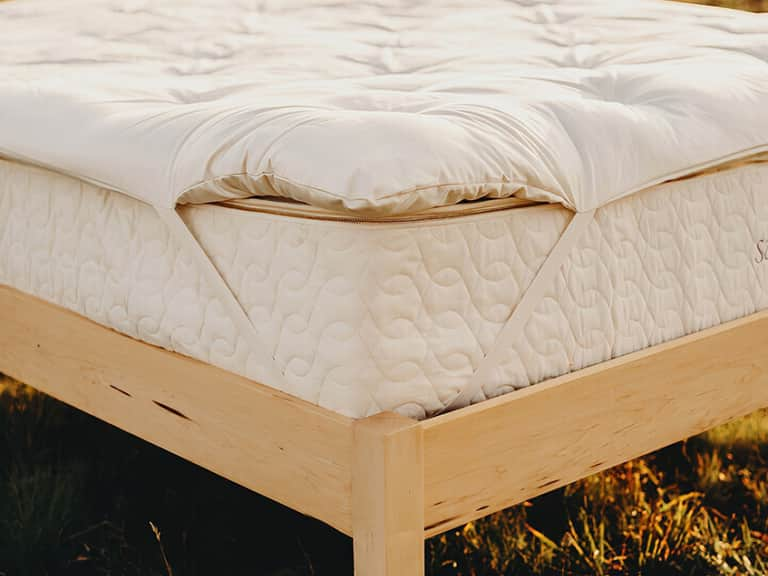
Follow the product’s instructions and relevant safety guidance rather than trying to judge suitability by pressing the surface once. Avoid choosing a crib mattress because it feels plush, contours deeply, or resembles a soft adult bed. Softness is not an advantage for an infant sleep surface. Nor should caregivers add a mattress topper to alter the feel: a topper can change the surface and introduce loose or poorly fitted layers.
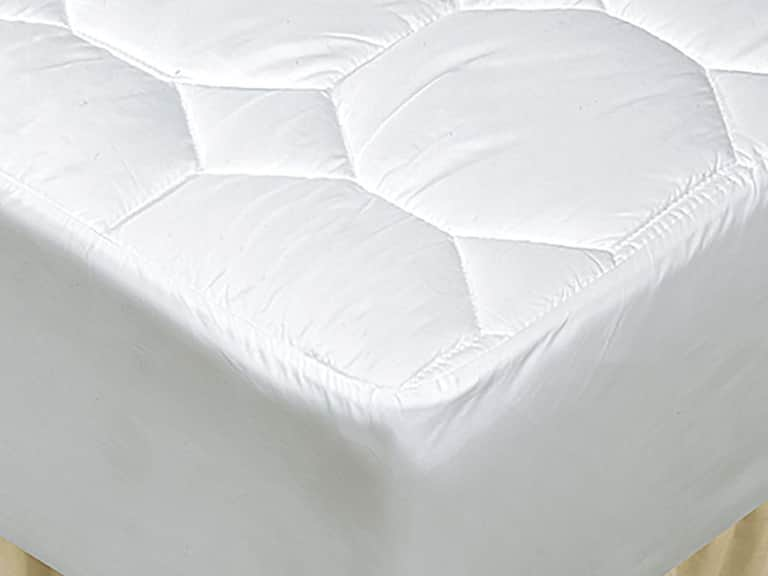
A waterproof cover, quilted panel, or other built-in feature should be assessed as part of the mattress’s complete construction. That is different from placing a separate cushioned layer on top. If a product’s design or description is unclear about whether a feature is integrated or removable, ask the manufacturer how it is intended to be used and whether its instructions preserve a firm, flat sleep surface.
Marketing phrases such as “breathable,” “cooling,” “supportive,” or “comforting” should not be mistaken for proof of safe sleep performance. They may describe material characteristics or a brand’s intended benefit. Look for clear, specific documentation about the product’s intended use and applicable safety compliance, and keep the crib free of accessories that soften or incline the surface.
Understand what “organic” does—and does not—tell you
Organic materials may appeal to families who want more information about agricultural sourcing or manufacturing choices. Yet “organic” is not a universal shorthand for chemical-free, non-toxic, hypoallergenic, safer, or better for sleep. Those are different claims, and each needs its own evidence. A mattress can include a certified organic cover while also containing other components that are not organic.
Read the claim at the level of the component. Is it the cotton cover, the filling, a particular fiber, or the whole product that is described as organic? Does the seller identify a certifying organization and explain which materials the certification covers? Is the certificate current and applicable to the specific item, rather than a general company statement? Precise answers are more useful than a prominent badge without context.
Certification systems differ in scope. Some focus on agricultural production or textile processing; others address emissions or chemical restrictions. A certification may apply to a material or a stage in the supply chain rather than to every part of a finished mattress. Families can ask what was assessed, which components are included, and whether the documentation names the exact product.
Keep safety compliance and organic certification in separate columns when comparing options. Organic status does not replace compliance with applicable crib-mattress regulations. Conversely, compliance with a safety rule does not tell you whether a material is organic. Both questions can matter, but they answer different things.
Be cautious with absolute language. Claims such as “chemical-free” are not a meaningful description of a complex manufactured object: materials are made of chemicals, including natural materials. More helpful information identifies the materials used, the treatments or coatings applied, the standards tested against, and the limits of the claim.
Compare materials and construction without assuming a winner
Crib mattresses may use different combinations of fibers, foam, springs, and coverings. Materials influence weight, flexibility, surface feel, cleaning needs, and how a mattress is assembled. No single material, by itself, guarantees a safer or more comfortable sleep outcome. The task is to understand the construction and make sure it suits the crib, care routine, and stated use.
Cover fabric is the surface caregivers are most likely to inspect. Ask whether it is woven or coated, removable or fixed, and how it should be cleaned. A cover that feels natural is not automatically washable or stain-resistant. Read the care label before buying, especially if a removable cover is presented as a convenience.
Fillings and cores can vary widely. A description should identify the main materials rather than relying on broad terms such as “natural,” “eco,” or “premium.” If the mattress contains several layers, look for a component list that explains each one. Ask the manufacturer how the core is intended to retain its shape over time and what signs of wear call for discontinuing use.
Waterproofing and moisture management are practical concerns in a crib. A built-in barrier may affect cleaning and help protect the interior from moisture, but claims about breathability or temperature regulation should be read as product-specific statements, not blanket guarantees. Confirm that any surface treatment is part of the mattress design and that care instructions do not require an unapproved cover or pad.
Construction and seams deserve attention because a crib mattress is handled, cleaned, and fitted repeatedly. Check for clear information about the materials, how the cover is joined, whether the product has sealed or accessible layers, and what the warranty covers. These details do not replace safety compliance; they help families understand durability and maintenance.
A useful comparison is therefore not “natural versus synthetic” in the abstract. It is a careful reading of the full build: identified materials, documented claims, intended use, fit specifications, cleaning directions, and current safety information.
Make care instructions part of the decision
Infant bedding faces ordinary wear as well as spills and leaks. Before choosing a mattress, find out what can be cleaned, how it can be cleaned, and what must remain in place. Some products call for spot cleaning; others have removable components. The manufacturer’s instructions should be explicit enough to follow without guessing.
Ask whether the mattress can be exposed to water, detergents, disinfectants, heat, or direct sunlight. These methods can affect materials or construction, and a cleaning approach that seems intuitive may not be approved. Do not remove a cover or alter the mattress unless the manufacturer says that it is designed to be removed and replaced by the caregiver.
Inspect the sleep surface regularly for tears, punctures, broken seams, exposed filling, persistent odors, water damage, or loss of shape. A cover that no longer fits smoothly or a core that has become uneven may be a reason to stop using the product and seek guidance. Follow any age, weight, or use limits stated by the manufacturer.
For a used mattress, cleanliness is only one consideration. Confirm that the product has not been recalled, modified, damaged, or stored in conditions that compromised it. A carefully cleaned mattress may still be unsuitable if its history is unknown or its fit and condition cannot be verified. When in doubt, consult the manufacturer or a relevant product-safety authority rather than relying on appearance alone.
Read safety documentation with a critical eye
In the United States, crib mattresses are subject to federal product-safety requirements, including standards administered by the Consumer Product Safety Commission. The specific rules that apply depend on the product type and current regulations. A responsible seller should be able to provide clear identification and explain how the product complies with requirements relevant to its intended use.
Look for the manufacturer or importer, model name or number, date information where applicable, and instructions for use and care. Keep those details after purchase. They can help caregivers identify a product if a safety notice or recall is announced. Search official recall information by brand and model rather than assuming that a product is unaffected because it is described as organic or premium.
Third-party certification can be helpful, but it is not a universal substitute for compliance with mandatory rules. Check what a certification covers and who issued it. A logo without a named standard, product scope, or verifiable documentation offers little basis for comparison. Ask direct questions when a claim is unclear; an informative answer should specify the product and the evidence behind the statement.
Be wary of health promises that outpace the evidence. A mattress should not be presented as preventing sleep-related death, curing allergies, or guaranteeing longer sleep. Material preferences can guide a purchase, but they do not replace safe sleep practices or advice from a child’s healthcare professional.
A practical checklist for comparing organic crib mattresses
When product pages make different claims, a short checklist can bring the decision back to concrete questions. Keep the crib model and its instructions close at hand, and compare one product at a time.
- Compatibility: Does the manufacturer identify the mattress as suitable for the exact crib size or model?
- Fit: Do the dimensions match the crib’s specifications, and does the mattress sit securely without gaps when installed as directed?
- Firmness and shape: Is it intended for infant sleep and designed to provide a firm, flat surface?
- Materials: Are the cover, core, fillings, coatings, and other layers identified clearly?
- Organic claims: Which specific components are certified, by whom, and under what standard?
- Safety information: Can the seller explain applicable compliance and provide product identification and instructions?
- Care: Are cleaning methods, removable parts, and limitations explained in plain language?
- Durability: What inspection guidance, warranty terms, and replacement recommendations does the manufacturer provide?
- Accessories: Does the setup avoid added toppers, loose pads, positioners, and other soft items?
Write down answers instead of relying on impressions created by a product page. If a key detail is missing—especially fit, intended use, or care—ask the seller or manufacturer before purchase. Clear documentation is not a luxury feature; it is how families distinguish a specific, checkable claim from a vague promise.
The quieter decision: prioritize evidence over adjectives
The market for organic crib mattresses sits at the intersection of two powerful concerns: infant safety and family values about materials. It is reasonable to care about both. The challenge is resisting the suggestion that one concern automatically settles the other. A plant-based fiber does not prove a mattress fits correctly; a certification badge does not tell the whole story of the construction; a soft, luxurious feel is not the goal for an infant sleep surface.
Start with a crib-compatible mattress that meets applicable requirements, lies flat, and fits snugly. Confirm that it is designed to remain firm and that the sleep environment can be kept bare except for a properly fitted sheet. Then evaluate material sourcing and certifications using specific, verifiable information. Finally, make sure the care instructions and product history are understandable and practical.
That order may feel less glamorous than comparing labels, but it is more useful. It separates what a mattress is made of from what it is designed to do, and both questions deserve honest answers. The best-informed choice is not necessarily the one with the most impressive language. It is the one whose fit, construction, safety information, and limits can be clearly understood.
Frequently asked questions
Does an organic crib mattress automatically make a crib safer?
No. Organic material claims and safety requirements address different questions. A mattress still needs to be intended for the crib, fit correctly, provide a firm and flat surface, and comply with applicable requirements.
Can I add a mattress pad or topper for comfort?
Do not add a topper or cushioning layer to change an infant sleep surface. Follow current safe-sleep guidance and the mattress instructions; use only a properly fitted sheet, with the crib otherwise clear of soft objects.
How can I tell whether a mattress fits my crib?
Use the crib manufacturer’s specifications and the mattress label, then inspect the installed mattress according to the instructions. It should sit securely without gaps. If the model or fit remains uncertain, contact the manufacturer before use.
What should I do if a product’s materials or certification are unclear?
Ask which components are covered, which organization issued the certification, and what standard or scope applies. If the seller cannot provide clear information, treat the claim as unverified and compare products with more complete documentation.