Sleep surfaces · Family guide
Naturepedic’s Organic Crib Design: Materials, Fit, and Care
A crib mattress is easy to overlook until the nursery is nearly ready. Yet its materials, dimensions, construction, and upkeep all matter to the everyday reality of infant sleep. Here’s a practical way to examine Naturepedic organic crib sleep surfaces—and the questions families can ask before bringing one home.
Published November 23, 2026
A crib mattress has a modest job description and an outsized presence in a young family’s life. It must fit its crib, provide a firm, level surface, and stand up to the regular work of sheets, spills, and cleaning. Materials matter too, particularly to families who want to understand what is in a product and how its components are made.
Naturepedic’s organic crib offerings invite that kind of closer look. The word “organic” is a useful starting point, not a complete description. A family assessing a crib sleep surface still needs to review the actual product specifications: its materials, certifications, construction, dimensions, and care instructions. Product lines and details can change, so the label and current manufacturer guidance should take precedence over assumptions based on a product name or an older description.
This guide focuses on those practical questions. It does not replace safe-sleep guidance or a pediatrician’s advice. Instead, it offers a framework for understanding the design choices that shape an organic crib mattress and for maintaining a clean, properly fitted sleep space.
Start with the sleep space, not the adjective
“Organic” can describe a material, a standard, or a broader approach to sourcing and manufacturing. It does not, on its own, tell a parent whether a particular mattress is the right size for a particular crib, how firm its surface is, what its waterproof layer contains, or how it should be cleaned. Those details belong in the product’s specifications and care label.
For crib mattresses, the central design question is not whether a surface feels luxurious to an adult. It is whether it is intended for the crib and provides the firm, flat sleep surface recommended by recognized safe-sleep guidance. The American Academy of Pediatrics advises placing infants on their backs on a firm, flat, non-inclined sleep surface, with only a fitted sheet. Keep pillows, loose blankets, comforters, stuffed toys, and other soft objects out of the infant sleep area.
That guidance helps put material preferences in context. A breathable textile or a carefully described layer may appeal to a household, but it should not be treated as a substitute for safe sleep practices. Nor should a softer add-on be used to modify a crib mattress. Families should use the mattress as designed and avoid toppers, positioners, or extra padding unless a qualified health professional and the product’s instructions specifically support a particular use.
In evaluating Naturepedic, or any other brand, separate three questions: What is the sleep surface designed to do? What materials and construction does the manufacturer disclose? And does the finished product meet the applicable requirements for crib mattresses in the market where it is sold? Clear answers make “organic” more meaningful than a broad impression.
Reading the materials list
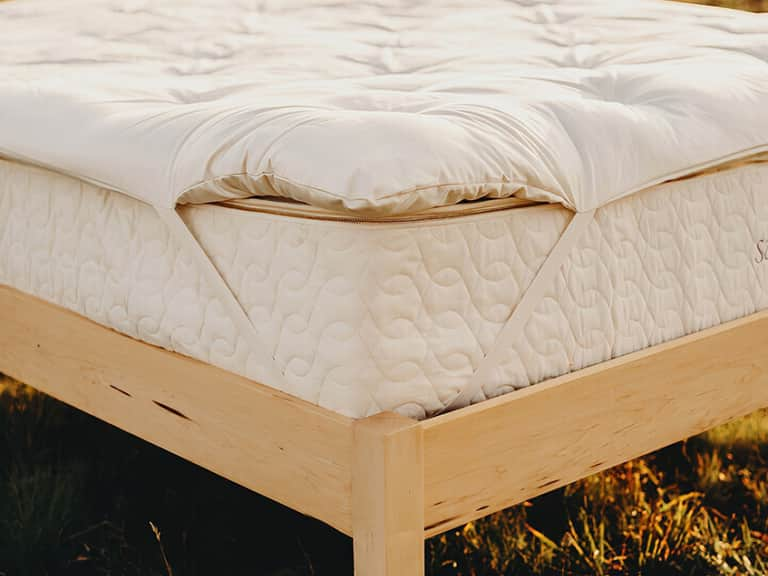
A crib mattress is a layered object. The cover, any moisture barrier, the inner support materials, seams, and edge construction each contribute to how it is made and maintained. Families who value organic materials can begin by identifying precisely which layers are certified or described as organic and which are not. A claim about one component should not automatically be read as a claim about every component in the finished mattress.
Look for a complete materials description rather than relying on a short headline. It should explain, as available, the cover fabric, inner core, barrier or waterproofing layer, and any quilting or bonding materials. If a detail is important to your decision and is not listed, ask the manufacturer or retailer for clarification. A straightforward answer should distinguish between fiber content, processing claims, and finished-product certifications.
Certification is another term worth reading carefully. Different certifications apply to different parts of a product or different stages of production; no single label necessarily answers every question a family might have. Check the name of the standard, what it covers, and whether the specific product—not merely a material supplier or brand—is within its scope. Current certificates and explanatory documentation are more useful than a vague badge or an unqualified environmental claim.
Organic preferences can be personal. Some households prioritize certified textile fibers; others want to understand a waterproof barrier, fire-safety design, or a manufacturer’s broader sourcing policies. These are related but distinct considerations. Fire-safety compliance, for example, is a regulatory matter; organic certification is not a replacement for compliance. Read the product’s statements on both rather than assuming one guarantees the other.
Materials can also affect practical expectations. A fabric cover may feel different from a coated surface, while a protective layer may be intended to help manage moisture. Neither description alone establishes how breathable, quiet, washable, or durable a particular mattress will be. Those qualities depend on the complete design and the manufacturer’s testing and instructions. Where comfort and airflow claims are made, look for precise, product-specific explanations.
Construction: the layers behind the cover
The inside of a crib mattress is less visible than its surface, but it is central to the product’s function. Depending on the model, a core may use different materials and construction methods. Families should not infer the core type from the brand name or from another mattress in the same product family. Confirm the exact model’s current specification sheet.
Pay particular attention to firmness and the manufacturer’s description of intended use. An infant crib mattress should provide a firm, level surface and should not sag or form a hollow. A simple press with a hand can offer a basic impression, but it is not a substitute for compliance information or the manufacturer’s guidance. The mattress should be used in the crib configuration and with the fitted sheet specified for that sleep space.
Edge structure and seams also deserve a glance. A well-fitted mattress should remain level and stable within the crib rather than slipping, buckling, or leaving a pronounced gap. Inspect the cover for intact seams and follow any instructions about orientation, rotation, or use of each side. If a mattress has designated infant and toddler sides, the age or transition guidance should come directly from the manufacturer; families should not guess based on feel alone.
Weight and handling can affect everyday care. A mattress that is frequently lifted for sheet changes needs to be manageable for the caregiver, but a lower weight does not itself indicate better quality or safety. Ask how the product is assembled, whether it arrives compressed or in multiple pieces, and whether it requires time to expand before use. Follow all unpacking and setup directions, including any instructions about ventilation or waiting periods.
Fit is a safety detail
A crib mattress should be designed for the specific type and size of crib in which it will be used. “Standard size” is not a reason to skip measurement: cribs and mattresses can vary, and product dimensions should be checked against the crib manufacturer’s requirements. Verify the model, mattress size, and crib instructions before purchase, especially when using a compact, portable, or specialty crib.
The familiar two-finger check is a useful screening practice: when the mattress is positioned correctly, there should not be a large gap between its edge and the crib sides. If there is a noticeable opening, the mattress may be too small or incorrectly positioned. Do not fill a gap with towels, blankets, foam, or other material. Contact the crib or mattress manufacturer to confirm compatibility and resolve uncertainty before the sleep space is used.
Fit also includes depth and shape. A mattress should sit flat, without being forced into the frame or bowing at the edges. Check that it is not too thick for the crib’s design and that the crib’s mattress-support settings are used as instructed. As a baby grows and begins to sit, pull up, or stand, caregivers should follow the crib manual’s directions for lowering the support platform. That adjustment is about the crib as a whole, not a reason to alter the mattress.
When comparing Naturepedic options, record the product’s exact name and dimensions rather than relying on a general category page. Confirm whether any stated measurement refers to the mattress itself, the shipping package, or a particular version. If a retailer’s listing and the manufacturer’s current instructions differ, seek clarification before ordering. A well-made mattress cannot compensate for a poor fit.
Care that protects the sleep surface
Infant bedding encounters ordinary mess: milk, drool, diaper leaks, and the occasional illness. Care is therefore part of design. Before the first sheet goes on, read the complete care instructions for the specific mattress. Some covers may be wipe-clean only; some components may have limits on washing, soaking, or drying. Do not assume that an organic fabric can be machine washed, or that a waterproof surface can tolerate any household cleaner.
If a spill occurs, remove the fitted sheet and follow the manufacturer’s directions promptly. Use only approved cleaning methods, avoid harsh chemicals unless specifically permitted, and let the sleep surface dry completely before making the bed again. Excess moisture trapped in a mattress can create problems, while aggressive scrubbing or heat may damage a cover or barrier. The product’s care label—not a general cleaning tip—is the authority for that model.
A washable, correctly sized fitted sheet is the only bedding layer recommended for the infant sleep surface by safe-sleep guidance. If families use a mattress protector, it must be compatible with the mattress and crib, fit securely, and not make the surface soft, uneven, or ill-fitting. Check whether the manufacturer permits one and whether it affects the mattress’s warranty. Avoid stacking layers or adding padding to make the surface feel more comfortable to an adult.
Routine inspection is as important as cleaning. Look for tears, loose seams, exposed filling, persistent odors, or signs that the mattress has warped or lost its shape. Check the crib frame and mattress support too, following the crib maker’s maintenance instructions. If damage is present or the mattress no longer lies flat, stop using it until its condition and suitability are resolved.
Storage and hand-me-down use call for judgment. Keep a mattress dry and protected from dust while stored, and preserve its instructions and model information. Before using a secondhand mattress, examine it for damage, confirm that it fits the crib, and check that it meets current applicable safety requirements. A clean appearance alone cannot establish its history, condition, or suitability.
A practical buying checklist
Product pages can make the decision feel like a contest between labels. A short, consistent checklist is more useful. Gather the crib manual and the mattress specification sheet, then compare the details directly. If you cannot find an answer, treat that as a question to resolve—not an invitation to assume.
- Exact model: Confirm the current product name and version, since specifications may change.
- Dimensions: Compare the mattress measurements with the crib maker’s stated requirements.
- Construction: Identify the core, cover, moisture barrier, seams, and any other disclosed layers.
- Material claims: Check which components are organic and what certification, if any, applies to each claim.
- Firmness and use: Review intended age range, surface guidance, and any instructions about sides or orientation.
- Care: Learn how to clean the cover, address spills, dry the product, and inspect it over time.
- Setup: Confirm unpacking, expansion, ventilation, and assembly instructions before use.
- Safety and support: Review applicable compliance statements, warranty terms, and the process for asking questions.
Families may also want to distinguish their non-negotiables from preferences. A precise fit and firm, flat surface are fundamental. A particular fiber, certification, or sourcing policy may be a meaningful preference, but it should be assessed alongside the product’s full design rather than in isolation. That approach turns a crowded list of claims into a decision that can be checked, explained, and revisited.
What “organic” can—and cannot—tell you
Interest in organic crib mattresses often reflects a desire for transparency. Families want to know what touches the sleep environment, how materials are sourced, and how products are made. Those are reasonable questions. The most informative answer is specific: it names the material, identifies the relevant standard, and explains what the standard covers.
But a materials story should not be asked to carry more weight than it can. “Organic” does not automatically mean chemical-free, allergen-proof, safer for every child, or a guarantee of better sleep. Nor does it establish that a product will fit every crib or can be cleaned in a particular way. Such broad conclusions require evidence beyond the label. For individual health concerns, consult a pediatrician or another qualified clinician.
A thoughtful evaluation therefore holds two ideas together. Material choices deserve scrutiny, especially when a manufacturer makes detailed claims. At the same time, the everyday essentials remain straightforward: use a suitable crib and mattress, ensure a snug fit, keep the surface firm and flat, use only a fitted sheet, and follow the care and safety instructions.
The calm of a clear checklist
Preparing a nursery is a series of small decisions made under the pressure of a large one: caring for a new child. A crib mattress does not need to be mysterious. Start with the crib’s measurements, verify the exact mattress model, read the construction and certification details, and keep the care instructions where they can be found after the packaging is gone.
Naturepedic’s organic crib sleep surfaces can be assessed through the same disciplined lens as any crib mattress: materials, construction, fit, and care. Ask what each layer contains, which claims apply to the finished product, how the mattress should be cleaned, and whether it is intended for the crib in question. Then apply safe-sleep guidance consistently. In a nursery, confidence rarely comes from one persuasive adjective. It comes from details that hold up when checked.